I Took a Close Look at Vapocept —
Here's What Stood Out
From a Memory & Cognitive Health Perspective
Before you spend money on another memory supplement, there's one thing worth understanding first. Most cognitive formulas focus on adding vitamins, herbs, or stimulants and hoping mental clarity improves. Vapocept's presentation takes a very different approach, built around a proposed five-stage process involving the environment around neurons, acetylcholine signaling, dormant neural connections, and ongoing cognitive support.
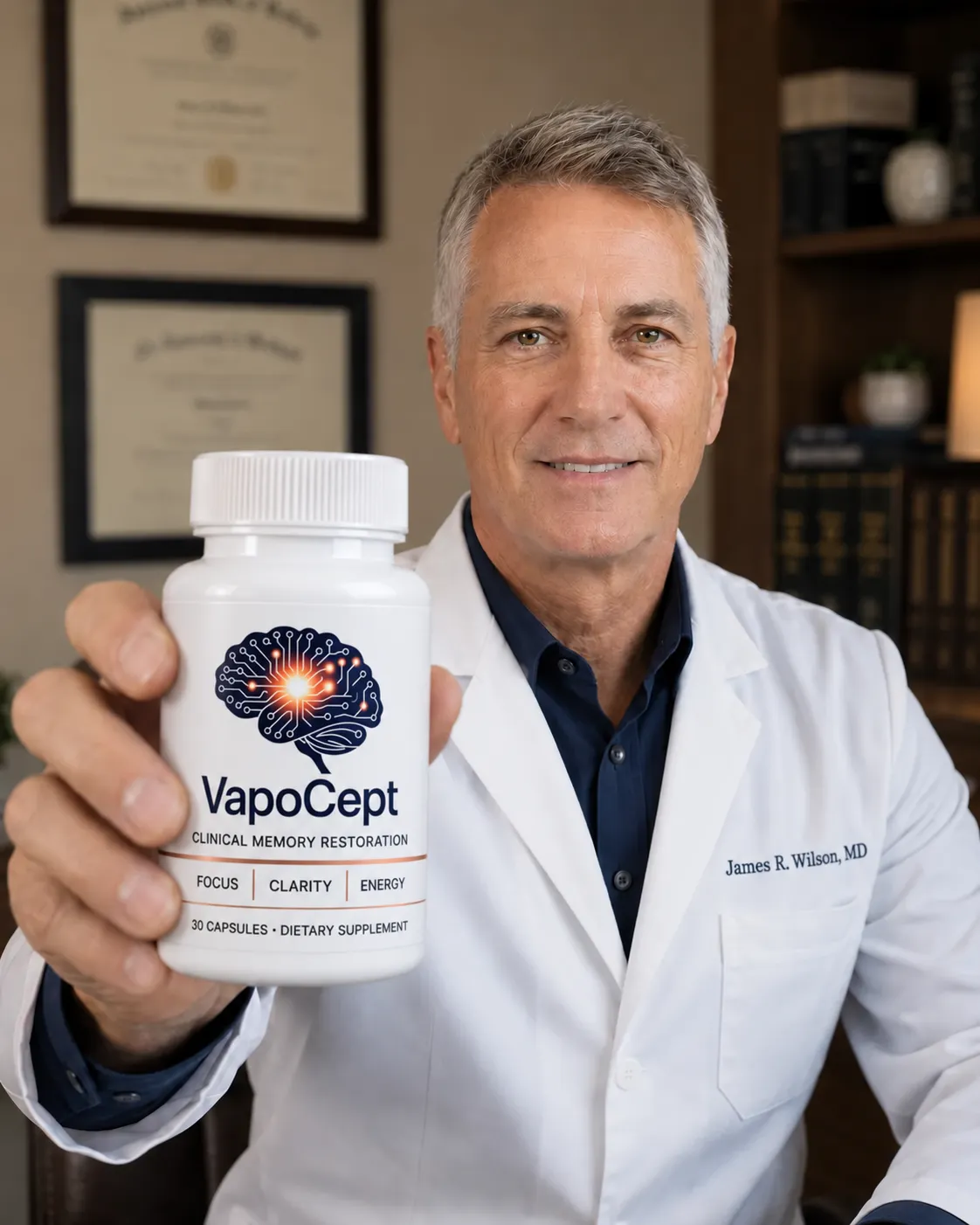

Why Vapocept Caught My Attention — And Why Its Cognitive Support Approach Is So Different
I'll be honest with you: I was skeptical at first. The memory supplement market is full of formulas promising sharper recall, better focus, and less mental fog. Many of them rely on long ingredient lists without giving you a clear explanation of how the pieces are supposed to work together. Vapocept immediately stood out because its presentation focuses on a very different question: what if some memory problems involve disrupted communication between neurons rather than memories simply disappearing?
The Vapocept presentation compares the brain to a vast library. In that analogy, neurons hold the information while acetylcholine acts like the librarian responsible for retrieving it. The presentation then introduces its controversial theory that accumulated microplastics may interfere with this communication and make memories harder to access. That is a claim made by the Vapocept presentation, not something that should automatically be treated as an established explanation for cognitive decline.
That's where Vapocept's proposed five-stage approach comes in. The presentation describes the sequence as: address the proposed buildup around neurons, reopen acetylcholine pathways, support dormant neural connections, support acetylcholine production, and help protect against future accumulation. Over the next few minutes, I'll break down how that mechanism is presented, what's inside the formula, what the Vapocept presentation claims, and what stood out when evaluating it as a cognitive-support supplement.
Before I Break Down Every Detail, Here's What Stood Out About Vapocept
I've reviewed plenty of memory-support formulas, and many tell essentially the same story: add a long list of vitamins, herbs, or nootropics and hope focus and recall improve. Vapocept caught my attention for a different reason — its presentation is built around a proposed five-stage process involving the environment around neurons, acetylcholine signaling, dormant neural connections, and longer-term cognitive support.
"What makes Vapocept interesting isn't simply another formula promising sharper memory. It's the five-stage theory behind the presentation: address the proposed buildup around neurons, support acetylcholine pathways, support dormant neural connections, restore acetylcholine support, and help defend the brain environment against future accumulation. That's the part that deserves a closer look."
My bottom line: if you're concerned about mental fog, difficulty recalling names or words, losing your train of thought, slower processing, or feeling less mentally sharp than you used to, Vapocept presents a noticeably different concept from formulas built around generic memory-support ingredients. Its main selling point is the proposed sequence of address buildup → reopen pathways → support connections → support acetylcholine → protect the brain environment. That's what makes Vapocept worth examining more closely — while keeping the presentation's more dramatic medical claims in perspective.
What's Actually Inside Vapocept — and What Role Does Each Component Play?
Vapocept's presentation centers the formula around four core compounds, with each one assigned a specific role inside its proposed five-stage cognitive-support sequence. Rather than presenting an oversized list of unrelated memory ingredients, the VSL connects each component to acetylcholine, the environment around neurons, neural connections, or longer-term cognitive support.
Ingredient note: The four components highlighted in the Vapocept presentation are eucalyptol, phosphatidylserine, Yamabushitake (Lion's Mane), and Bacopa monnieri. The biological effects below describe how the official presentation positions these compounds and should not be read as guaranteed treatment outcomes.
Eucalyptol is presented as the first major compound in Vapocept's sequence. The VSL identifies it as a compound associated with Vicks VapoRub and positions it around supporting acetylcholine-related signaling and the pathways involved in memory retrieval. The presentation describes this as the opening step before the other components address different parts of the proposed mechanism.
Phosphatidylserine is positioned as the second part of the Vapocept strategy. According to the presentation, its role is connected to the physical environment surrounding neurons and to the VSL's controversial theory involving accumulated microplastics. In the sequence used by Vapocept, it is presented as complementing the acetylcholine-focused first stage by supporting a clearer environment for normal neuronal communication.
Yamabushitake — identified in the presentation as Lion's Mane — is assigned the neural-connection part of the formula. The VSL discusses it in connection with nerve growth factor and positions it around supporting neuronal structures and connections that may become less active over time. This gives it a different role from the first two components rather than simply duplicating their function.
Bacopa monnieri completes the four-compound formula described in the Vapocept presentation. It is positioned around supporting the body's acetylcholine-related processes at the production side of the proposed sequence. In the VSL's explanation, this complements eucalyptol's earlier acetylcholine-focused role while the other compounds address the neuronal environment and neural connections.
What makes Vapocept interesting from a formulation standpoint isn't simply having four recognizable cognitive-support compounds. It's the way the presentation assigns a different role to each one. Eucalyptol is positioned around acetylcholine signaling, phosphatidylserine around the environment surrounding neurons, Yamabushitake around neural connections, and Bacopa monnieri around acetylcholine-related production. Whether the VSL's more dramatic claims about microplastics and cognitive reversal ultimately hold up is a separate question, but the formula itself at least follows a clear sequence rather than looking like a random kitchen-sink blend.
The Biggest Reasons Vapocept Stands Out — Plus a Few Things to Know Before Ordering
After looking closely at Vapocept, I found several things that separate it from the typical memory-support formula. The main distinction is its five-stage framework around neuronal communication, acetylcholine, neural connections, and longer-term cognitive support rather than simply combining a long list of generic nootropic ingredients.
What People Want to Know Before Trying Vapocept
When people research memory-support products, the same concerns come up repeatedly: Will I feel less mentally foggy? Will names and words come to me more easily? Can I stay focused during conversations and feel more confident about my memory? The examples below reflect the types of concerns and motivations discussed throughout the Vapocept presentation.
Community-style responses

Ryan Mitchell
I started looking into Vapocept because of my grandmother. She had begun forgetting familiar names and sometimes repeated the same question without realizing it. What interested me most was that the presentation didn't describe memory problems as simply "getting older." The whole focus on brain communication and acetylcholine was what made me want to research it further.

Emily Carter
My grandma kept saying she felt like words were "right there" but she couldn't always pull them out during a conversation. She was getting frustrated and embarrassed by it. I found Vapocept while researching memory support for her, and the explanation about acetylcholine acting like a messenger between neurons was the part that caught my attention.

Patricia Johnson
The thing that bothers me most is walking into a room and forgetting what I went in there for. It sounds small until it starts happening more often. Vapocept caught my attention because the presentation tries to explain what may be happening with communication between brain cells instead of just saying to take another multivitamin.

Susan Miller
For me it's losing my train of thought halfway through a sentence. I know exactly what I want to say and then suddenly it's gone. That's when I started taking memory support more seriously. The Vapocept presentation's focus on acetylcholine and normal brain communication was the part I wanted to understand better.

Linda Parker
Mental fog is probably the best way I can describe it. I can still do everything I normally do, but sometimes it feels like my brain is working through a layer of haze. I wanted something simple enough to stay consistent with, so Vapocept's daily routine was one of the reasons I decided to read more about it.

Barbara Collins
I started paying attention when I needed to reread things two or three times before they really stuck. I've seen plenty of memory supplements with huge ingredient panels, but Vapocept stood out because the four main compounds are each given a specific role inside the overall cognitive-support strategy.

Richard Thompson
I'm 67 and what bothers me most isn't forgetting where I put my glasses once in a while. It's when a familiar person's name just refuses to come to me. That makes you wonder what's going on. The memory-retrieval side of the Vapocept explanation is what interested me most.

William Carter
I had started accepting slower thinking as just part of getting older. What made me research Vapocept was the way its presentation talks about communication between neurons rather than simply saying age is the whole explanation. I still wanted to understand the claims carefully before deciding anything.

Robert Miller
The biggest thing I want from any memory-support routine is consistency. I don't expect one serving to suddenly change everything. What interested me about Vapocept was that the presentation treats it as an ongoing protocol instead of something you only think about on a bad memory day.

James Anderson
What got my attention was the four-part formula. I've seen a lot of memory supplements with twenty ingredients on the label, but sometimes I'd rather understand why each main ingredient is there. The roles Vapocept assigns to eucalyptol, phosphatidylserine, Lion's Mane, and Bacopa made the formula easier to follow.

Thomas Walker
At 71, staying mentally independent matters to me just as much as staying physically independent. Remembering appointments, conversations, names, and everyday details is part of that. That's why I pay attention to products that focus on cognitive support rather than just promising a quick energy boost.
My Final Verdict on Vapocept After Reviewing the Formula, Mechanism, and Offer
After going through the Vapocept presentation, formula, pricing, and proposed mechanism, the biggest thing that stands out is this: Vapocept does not position itself as simply another generic memory blend filled with unrelated vitamins and herbs.
Its entire argument is organized around a much more specific five-stage theory. The presentation focuses on the environment surrounding neurons, acetylcholine signaling, dormant neural connections, acetylcholine production, and longer-term protection of the brain environment. From there, the formula is built around four main compounds: eucalyptol, phosphatidylserine, Yamabushitake (Lion's Mane), and Bacopa monnieri.
"What makes Vapocept interesting isn't a huge ingredient list. It's the way the presentation assigns each of the four core compounds a specific role inside one connected cognitive-support sequence. The formula at least has a clear logic rather than looking like a random collection of popular nootropics."
That's also why Vapocept is likely to attract adults whose concerns go beyond an occasional misplaced key. The presentation speaks directly to people dealing with mental fog, difficulty recalling familiar names or words, losing their train of thought, slower processing, rereading information, and feeling less mentally sharp than they used to.
I would still separate the underlying supplement concept from the much stronger claims made throughout the VSL. The presentation makes aggressive statements about microplastics, Alzheimer's disease, reversal of cognitive decline, NASA research, and dramatic memory restoration. Those claims should not be treated as guaranteed or established medical outcomes. What can be evaluated more clearly is the product's positioning: a focused four-compound cognitive-support formula organized around a consistent daily routine.
The current offer also reduces the per-bottle price considerably on the larger packages. The 3-bottle package is presented at $69 per bottle, while the 6-bottle package drops to $49 per bottle. Both are below the $79-per-bottle price of the 2-bottle starter option, and the VSL describes six bottles as approximately six months of the complete protocol.
- The core differentiator is its proposed five-stage approach to cognitive support and neuronal communication
- The formula centers on eucalyptol, phosphatidylserine, Yamabushitake (Lion's Mane), and Bacopa monnieri
- The presentation describes a simple 10-second morning protocol and a single daily dose
- Follow the usage directions printed on the actual product you receive
- Do not treat the VSL's claims about Alzheimer's, microplastics, or cognitive reversal as guaranteed medical outcomes
- The 3-bottle option is presented at $69 per bottle for approximately three months of supply
- The 6-bottle option has the lowest listed price at $49 per bottle and is presented as approximately six months of supply
- The current presentation includes a 60-day money-back guarantee
Want to See the Current Vapocept Packages Before You Decide?
The current presentation includes 2, 3, and 6-bottle packages at $79, $69, and $49 per bottle respectively, plus a 60-day money-back guarantee.
See Vapocept's Official Offer → 60-day guarantee · Current package availability may change · Secure checkout
Still on the fence about Vapocept?
You're not alone.
Have a question about Vapocept, its memory-support approach, the formula, or whether it fits your situation? Send it below and we'll review it confidentially.
Brain Health Review Contributor
Question sent!
Your Vapocept question was submitted successfully.
Please check your email for any response.